
Opinion · Market
Buy, lease or rent — the honest state of the SA heavy equipment market
By Marcus du Toit · Published 20 Jun 2026 · Updated 21 Jun 2026 · 8 min read
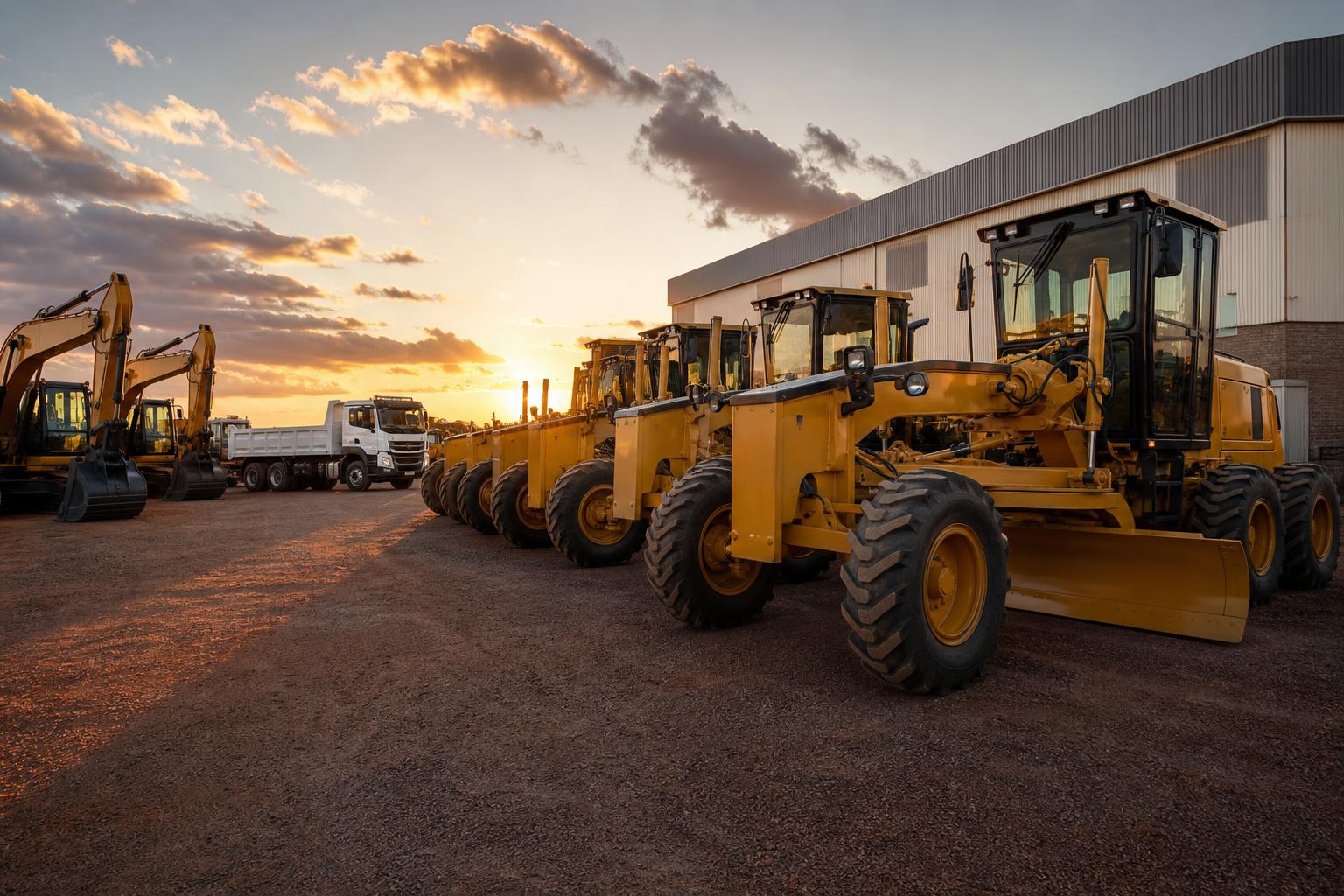
TL;DR — Above ~1,200 productive hours a year on a fixed scope, buy outright or instalment-sale (you claim SARS Section 12C: 40% in year 1, 20% for the next 3 years). Between 600–1,200 hours, a full-maintenance operating lease usually wins (100% deductible, off balance sheet). Under 600 hours or on short contracts, wet or dry rental is almost always cheapest.
"I get the same question every week — should I buy this machine, take it on lease, or just rent it for the contract? There's no single right answer. There is a right answer for your hours, your contract length and your tax position." — Marcus du Toit
Where the market actually sits in 2026
South Africa's heavy equipment market in 2026 is a tale of three buyers. The first is the established civils or mining contractor who's been buying premium-brand yellow for 30 years and isn't going to change. The second is the new generation of BEE-funded and owner-operator businesses scaling against tight funding ceilings — and they're driving most of the growth. The third is the pure plant-hire fleet, where the machine is just a yield-bearing asset on a balance sheet.
Three buyers, three completely different correct answers to the buy-lease-rent question. The mistake I see most often is people copying what their neighbour did, instead of running the numbers on their own utilisation and tax position.
Option 1 — Outright purchase (cash or instalment sale)
You buy the machine, you own it, it sits on your balance sheet, and you depreciate it. In 2026 South Africa, almost nobody pays cash for a R2.2m Shantui grader or a R1.8m Powerstar tipper — they finance it over 48–60 months through Wesbank, Nedbank CIB, Standard Bank Vehicle and Asset Finance, or Investec, typically at prime + 1% to prime + 3% depending on the deposit and your balance sheet.
Tax wins:
- Section 12C wear-and-tear: 40% in year 1, 20% in years 2–4. On a R2.2m Shantui that's R880,000 deductible in year one, then R440,000 a year for three years.
- Finance interest: fully deductible against income.
- Input VAT: 15% of the purchase price claimable as input VAT if you're a VAT vendor.
- Capital appreciation (or at least defence): when you're done, the residual is your asset, not the bank's.
Best for: high utilisation (1,200+ productive hours a year), long-term scope (3+ years of visible work), strong balance sheet, owner-operators who'll run the machine into the ground and still extract resale.
Option 2 — Operating or full-maintenance lease
The bank or OEM-backed finance house owns the machine. You pay a fixed monthly rental over 36–60 months, often with a full-maintenance and warranty wrap built in. At the end you hand it back, refinance the residual, or buy out at a pre-agreed price.
Tax wins:
- 100% expense deduction: every rand of the lease instalment is deductible operating expense in the year it's paid.
- Off balance sheet (for tax): doesn't show as a capital asset, doesn't burn your gearing ratio when you go back to the bank for the next deal.
- Input VAT on each instalment: friendlier cash flow than a R330,000 VAT hit on the purchase price up front.
- Maintenance bundled: if it's a full-maintenance lease, parts, services and major componentry are the financier's problem — your operating cost line is genuinely fixed.
Best for: medium utilisation (600–1,200 hours), contract-driven work where the scope is 24–48 months, businesses that want predictable monthly cash flow and a clean balance sheet for tender ratings.
Option 3 — Wet or dry rental
You call a plant-hire company (CTEG and most of our competitors run rental desks), they deliver the machine — wet hire includes operator, fuel and full maintenance; dry hire is the machine only, you supply the operator and consumables. You pay per hour or per month, and you walk away when the contract ends.
Tax wins:
- 100% expense deduction: rental invoices are deductible the moment they're booked.
- Zero capital deployment: nothing on the balance sheet, no finance approval, no deposit.
- Input VAT on each invoice: recovered monthly through your VAT201.
- Risk transfer: breakdown, finance cost, residual value risk and insurance all sit with the rental company.
Best for: short contracts (under 18 months), seasonal work, peak-demand fleet top-up, anyone who hasn't yet built balance sheet for bank finance, and anyone testing a new brand or class of machine before committing.
The numbers — a worked example on a Shantui grader
| Scenario (5 years, 1,500 hrs/yr) | Cash out over 5 yrs | Year-1 tax deduction | Ends with… |
|---|---|---|---|
| Buy (instalment sale, 20% deposit, 60m) | ~R2.85m | R880k (12C) + interest | Owned asset, ~R550k residual |
| Operating lease, 60m, FMC | ~R3.20m | Full year's instalments (~R640k) | Hand back / buy-out option |
| Wet rental @ R950/hr, 7,500 hrs | ~R7.1m | Full rental spend deductible | Nothing — pure expense |
Indicative June 2026 figures. Wet rental cash-out is gross — you'd typically recover most of it from the end client. The point isn't that rental is "expensive", it's that rental is for risk transfer, not for owning the asset.
My honest take, after 15 years selling into this market
If your utilisation is genuinely above 1,200 hours a year and your work is visible for the next three years, buy. Take the instalment sale, claim the 12C, run the machine. The maths beats lease and beats rental by a wide margin.
If your utilisation sits in the messy middle — between 600 and 1,200 hours — or if you're tender-driven and your balance sheet matters for prequalification, operating lease. Fixed monthly cost, full deduction, the financier carries the residual risk, and your gearing stays clean.
If you're under 600 hours, on a single contract under 18 months, or you genuinely don't know yet whether you'll need that machine class again, rent. Don't tie up capital and balance sheet for a machine that'll sit in your yard 60% of the year.
Almost every owner I deal with eventually does all three at the same time — owns their core fleet, leases the assets they want off balance sheet, and rents the peak-demand top-up. The trick is being honest about which machine belongs in which bucket.
Want me to run the maths on your specific machine?
Tell me the class of equipment, your contract length, your expected hours and whether you're a VAT vendor. I'll send a buy vs lease vs rent comparison on a real spreadsheet.
This is a market overview, not tax advice. Always run the final numbers past your accountant or SAIT-registered tax practitioner.
Frequently asked questions
The buy-lease-rent questions I get most often.